What Does “Interstate Carrier” Mean Under UCR?
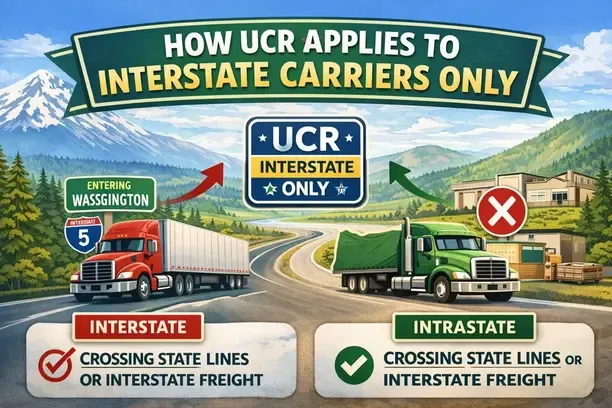
An interstate carrier is any motor carrier, owner-operator, or transportation business that is involved in commerce crossing state or national borders.
You are considered interstate if you:
-
Physically cross state lines with a commercial vehicle
-
Transport freight that originated in another state or country (even if you stay within one state)
-
Operate between the U.S. and Canada or Mexico
If any part of your operation involves interstate commerce, UCR registration is required.
Why UCR Applies Only to Interstate Carriers
The UCR Program was created to replace the former Single State Registration System (SSRS), which governed interstate trucking activity. Because of this federal foundation:
-
UCR is tied directly to interstate authority
-
It is enforced by states on behalf of interstate commerce regulations
-
Intrastate-only carriers fall outside the program’s scope
Purely intrastate operations are not subject to UCR, even if the vehicle is large or requires other state permits.
Who Must Register for UCR?
UCR applies to the following interstate entities:
-
For-hire motor carriers
-
Private motor carriers
-
Owner-operators operating interstate
-
Freight brokers
-
Freight forwarders
-
Leasing companies
If the business has a USDOT number and is engaged in interstate commerce, UCR registration is typically required.
Who Is Exempt from UCR?
You do NOT need UCR registration if:
-
You operate strictly intrastate within one state
-
You do not transport interstate freight
-
Your vehicles are used exclusively for personal, non-commercial purposes
-
You are a federally exempt carrier and do not operate interstate
Important: Having a USDOT number alone does not automatically trigger UCR—interstate activity does.
Common Misunderstanding: “I Never Cross State Lines”
Many carriers believe UCR does not apply because they never leave their home state. However, UCR can still apply if:
-
The cargo originated in another state
-
The load is part of a continuous interstate movement
-
You haul freight from a port, rail yard, or warehouse tied to interstate shipping
In these cases, the operation is legally considered interstate commerce, and UCR is required.
How States Enforce UCR
UCR compliance is enforced through:
-
Weigh stations
-
Roadside inspections
-
Registration audits
-
State permitting systems
Non-compliance can result in:
-
Citations and fines
-
Out-of-service orders
-
Delays at weigh stations
Key Takeaways
-
UCR applies only to interstate carriers and businesses
-
Intrastate-only operations are not required to register
-
Crossing state lines is not the only trigger—interstate freight counts
-
Brokers, freight forwarders, and leasing companies must also comply