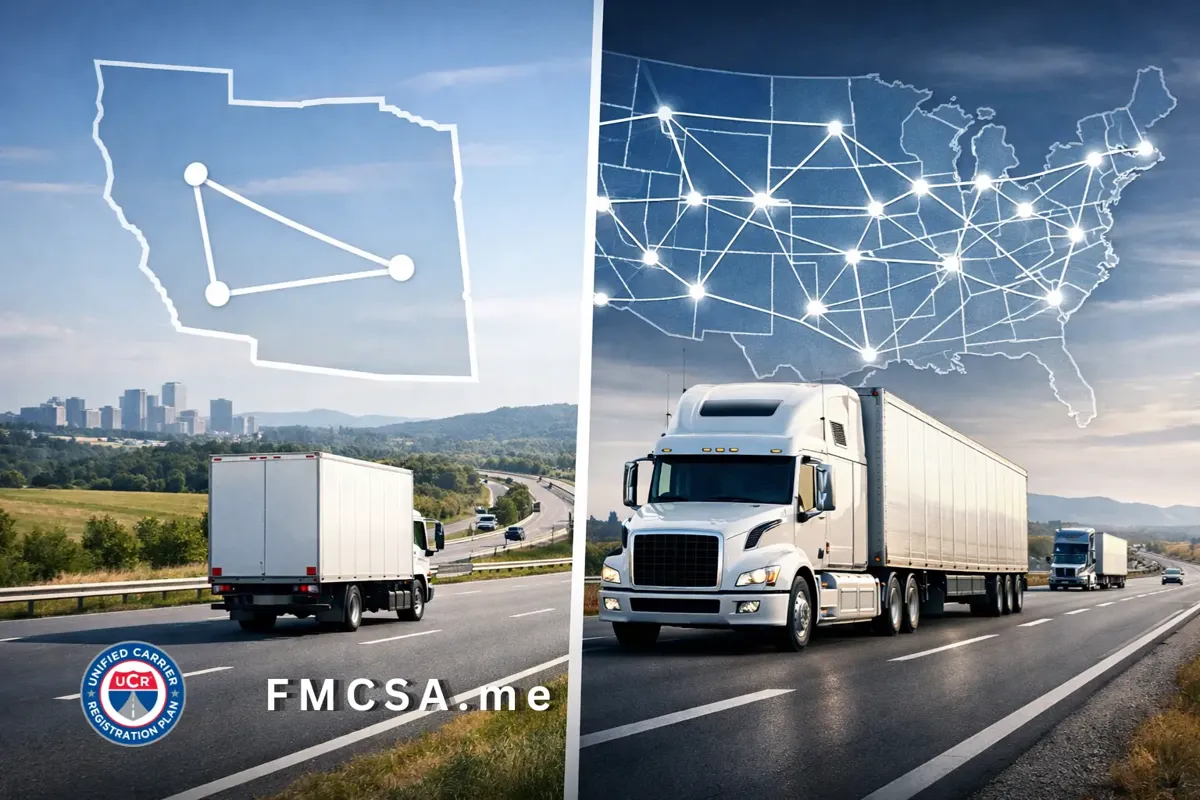
Single-State vs Multi-State Carriers: UCR Differences Explained
For trucking companies, understanding how Unified Carrier Registration (UCR) applies to your operation is essential, especially when comparing single-state and multi-state carriers. The way UCR impacts your business depends on your operational scope, so let's clarify where those differences arise.
What Is UCR and Who Needs It?
UCR is a federally mandated program that requires individuals and companies operating commercial motor vehicles in interstate commerce to register annually and pay a fee based on fleet size. Whether you operate in one state or across multiple states, UCR compliance is mandatory if your business crosses state lines.
Single-State Carriers: When UCR May Not Apply
If your trucking operation is strictly intrastate, meaning you only transport goods within one state, you may not need to register for UCR. However, there’s an important catch:
Some carriers believe they are intrastate but still engage in interstate commerce indirectly (e.g., by hauling goods that originated in another state). In these cases, UCR registration is still required.
Key takeaway: Single-state carriers must actively assess if any part of their business qualifies as interstate commerce to avoid missing required UCR registration.
Multi-State Carriers: Mandatory UCR Compliance
Carriers operating across state lines must comply with UCR registration, including the following:
- Owner-operators hauling interstate loads
- Fleet companies are expanding into multiple regions.
- Carriers working with brokers or load boards across states
Multi-state carriers are also more likely to face roadside inspections and audits, making UCR compliance even more critical to avoid penalties and delays.
Key Differences Between Single-State and Multi-State Carriers
- Registration Requirement:
Multi-state carriers must register; single-state carriers may be exempt depending on operations. - Compliance Risk:
Multi-state carriers face higher scrutiny and enforcement. - Operational Complexity:
Multi-state operations require stricter compliance tracking, including UCR. - Cost Impact:
UCR fees scale with fleet size, which often grows with multi-state expansion
Why Register Through FMCSA.me?
Choosing where to complete your UCR registration matters more than most carriers realize. Many third-party portals add unnecessary fees, provide outdated guidance, or fail to flag compliance issues that could lead to penalties later.
Registering through FMCSA.me gives you a streamlined, carrier-focused experience designed specifically for trucking businesses. Our platform helps ensure your fleet size is reported correctly, reduces the risk of costly filing errors, and keeps your registration aligned with FMCSA records.
Instead of navigating confusing government forms or unreliable third-party services, carriers get a faster, more accurate process built around real-world operational needs.
Whether you operate in one state or across many, understanding how UCR applies to your business is key to staying compliant and avoiding disruptions. As your trucking operation grows, ensuring accurate and timely registration becomes even more important.