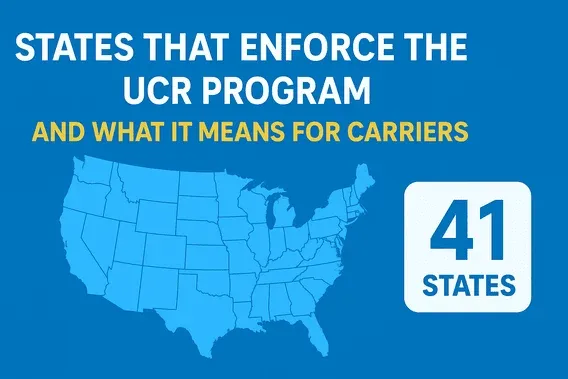
1. Which States Enforce the UCR Program?
A total of 41 states participate in UCR enforcement. These states collect UCR fees, conduct roadside checks, and issue penalties for non-compliance.
Participating UCR Enforcement States
Alabama
Arkansas
Arizona
California
Colorado
Connecticut
Delaware
Georgia
Idaho
Illinois
Indiana
Iowa
Kansas
Kentucky
Louisiana
Maine
Maryland
Massachusetts
Michigan
Minnesota
Mississippi
Missouri
Montana
Nebraska
New Hampshire
New Mexico
New York
North Carolina
North Dakota
Ohio
Oklahoma
Oregon
Pennsylvania
Rhode Island
South Carolina
South Dakota
Tennessee
Texas
Utah
Virginia
Washington
West Virginia
Wisconsin
These states may check UCR during roadside inspections, weigh station stops, and audits.
2. Non-Participating States (But Carriers Still Must Register)
Nine states do not participate in UCR enforcement:
-
Arizona (participates but does not collect fees directly—registration still required)
-
Florida
-
Hawaii
-
Maryland
-
Nevada
-
New Jersey
-
Vermont
-
Wyoming
-
District of Columbia
✱ Important: Even if your base state does not participate, you must still register if you operate interstate. Carriers in non-participating states typically register through a neighboring UCR state.
3. What UCR Enforcement Looks Like
Enforcement varies by state, but common checks include:
Roadside Inspections
Officers may pull your DOT number and check UCR payment status in real-time.
Weigh Stations
Many states flag vehicles with “UCR Out of Service” warnings in their system.
Safety Audits and Compliance Reviews
Failure to register for UCR is a common violation found during a New Entrant Safety Audit.
4. What Non-Compliance Means for Carriers
Penalties & Fines
Fines range from $100 to over $1,000, depending on the state. Some states can issue multiple violations per stop.
Out-of-Service Orders
A few states—such as Indiana, Georgia, and Washington—may place a vehicle out of service until UCR is paid.
Delay and Inspection Time
Non-compliant carriers often face longer inspections or added scrutiny.
5. How Carriers Can Avoid UCR Issues
✔ Register annually between October 1 and December 31
✔ Keep your DOT information up to date
✔ Confirm your UCR payment posted before operating
✔ Maintain proof of payment (screenshot or receipt)
✔ Use the official UCR website, not third-party scams
6. What This Means for Carriers Operating Interstate
If you operate across state lines:
-
You must be registered for UCR, even if based in a non-participating state.
-
Enforcement can occur in any participating state you travel through.
-
UCR compliance is quick and inexpensive compared to fines.
-
Consistent enforcement nationwide means no state is a safe “workaround.”