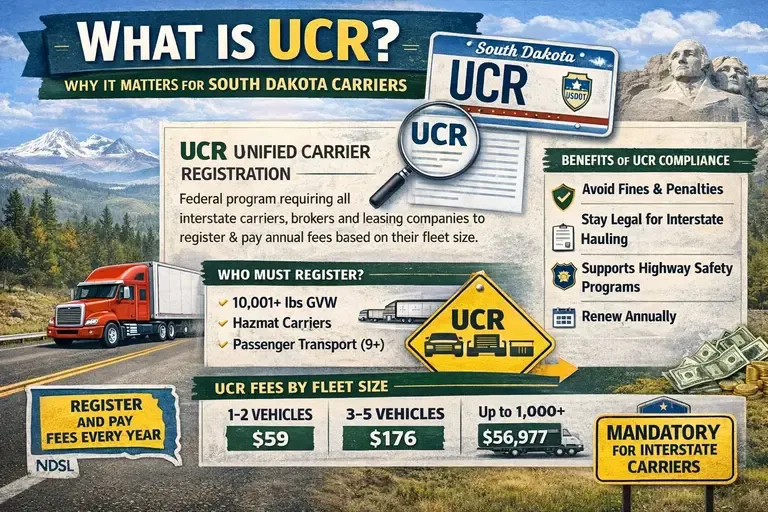
Who Must Register in South Dakota?
Any carrier meeting the following criteria must register:
-
Operates commercial motor vehicles with a gross vehicle weight of 10,001 lbs or more OR
-
Carries hazardous materials requiring placarding OR
-
Transports passengers for hire in vehicles designed to carry 9+ passengers (including the driver)
Exemptions may include government vehicles, private carriers not operating interstate, and certain farm vehicles.
Why UCR Matters for South Dakota Carriers
-
Legal Compliance
-
Operating without UCR registration is illegal for interstate carriers.
-
Penalties can range from $100 to $1,000 per vehicle depending on violations.
-
-
Avoiding Fines and Audits
-
South Dakota law enforcement and DOT inspectors can verify your UCR status during roadside inspections.
-
Noncompliance may result in out-of-service orders until registration is confirmed.
-
-
Supports Safety and Infrastructure
-
UCR fees collected are distributed to states to support highway safety programs, law enforcement, and motor carrier safety oversight.
-
-
Fleet Size Determines Fees
-
Fees vary based on the number of vehicles in your fleet, ranging from $59 to over $56,977 annually (for fleets of 1 to 1,000+ vehicles).
-
Proper registration ensures you pay the correct amount and avoid over- or underpayment issues.
-
How South Dakota Carriers Can Register
-
Determine Eligibility – Check if your fleet size and operation type require registration.
-
Visit the https://www.fmcsa.me/ – Online registration is fast and accepted in all states.
-
Pay the Annual Fee – Fees are tiered by fleet size.
-
Receive Proof of Registration – Must carry proof in the vehicle during interstate operations.
Tip: Keep records of your UCR registration year-to-year to avoid audit complications.
Key Takeaways
-
UCR is mandatory for interstate carriers in South Dakota.
-
Registration helps carriers stay compliant, avoid fines, and support highway safety.
-
Fees are based on fleet size and must be renewed annually.
-
Failing to register can lead to serious financial and operational penalties.