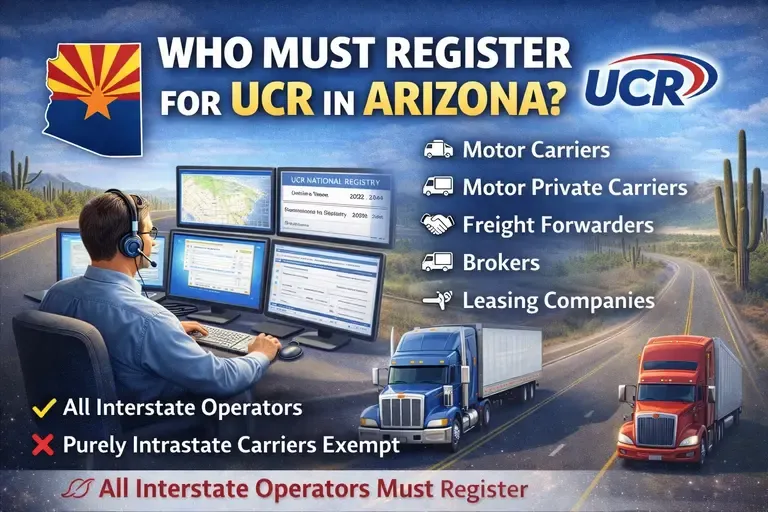
1. Motor Carriers
You must register if you operate a commercial motor vehicle (CMV) in interstate commerce. This includes:
-
For-hire carriers transporting goods or passengers
-
Private carriers transporting your company’s goods
These vehicles are typically defined as having a GVW or GVWR of at least 10,001 pounds, or transporting hazardous materials requiring placarding.
2. Motor Private Carriers
Companies that operate CMVs for their own business (not for hire) but still cross state lines must register.
3. Freight Forwarders
Businesses that arrange or coordinate freight transportation (even if they don’t operate vehicles themselves) are required to register.
4. Brokers
If you arrange transportation between shippers and carriers for compensation, you must register—even if you don’t own vehicles.
5. Leasing Companies
Companies that lease or rent vehicles to interstate carriers are also subject to UCR.
Key Points About UCR Registration
Interstate Commerce Is the Trigger
You must register for UCR if your operations involve:
-
Crossing state lines, or
-
Transporting freight that is part of interstate movement (even if a particular trip begins and ends within one state).
Even if Arizona Doesn’t Participate
Arizona isn’t among the 41 states that administer the UCR program—but if you are based there and operate in interstate commerce, you still must register through the UCR Plan and pay fees for the year you operate.
Who Does Not Have to Register
-
Purely intrastate carriers that never engage in interstate commerce
(they don’t cross state lines and their shipments don’t become part of interstate movement).
Quick Example
| Business Type | Interstate? | UCR Required? |
|---|---|---|
| Trucking company hauling freight across state lines | yes | yes |
| Broker arranging interstate shipments | yes | yes |
| Company hauling only within Arizona (no state lines) | no | no |
| Freight forwarder coordinating interstate transportation | yes | yes |
| Leasing vehicles to interstate carriers | yes | yes |
When to Register
UCR registration typically opens October 1 each year, and the fee must be paid by December 31 for the upcoming registration year.
Failing to register before you begin interstate operations can lead to fines or compliance violations.