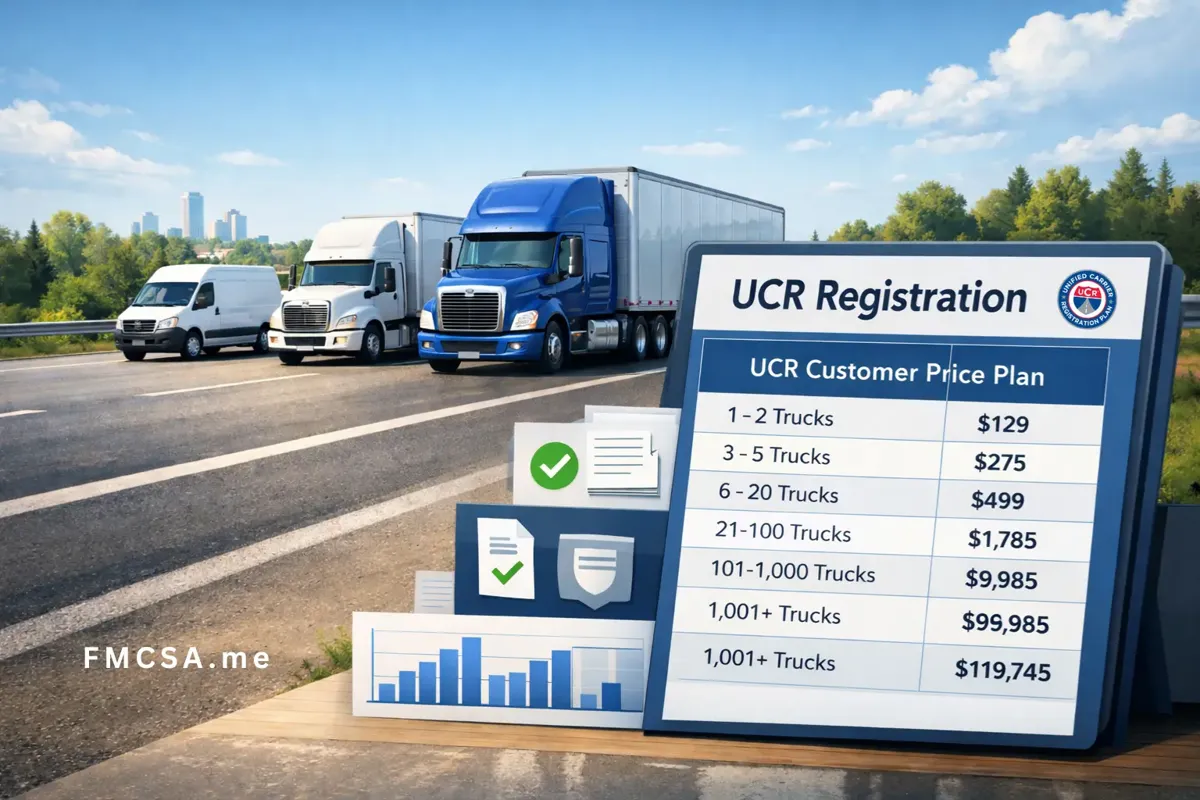
How Fleet Size Affects Your UCR Registration Fees
For interstate trucking companies, Unified Carrier Registration (UCR) is mandatory and must be renewed annually. While most carriers know they must file UCR each year, many are unsure how their fleet size impacts the fees they pay. Understanding how fleet size is calculated and how it determines your UCR fee bracket can help you avoid overpaying or, worse, running afoul of compliance requirements.
This guide covers how fleet size affects UCR fees and what carriers need to know.
What Is Fleet Size in UCR Registration?
When filing UCR, fleet size refers to the total number of commercial motor vehicles operated by a motor carrier in interstate commerce. These vehicles are used to transport passengers or property and must meet federal commercial vehicle definitions.
Fleet size is important because the UCR fee structure is based entirely on the number of vehicles a company operates. The more vehicles in your fleet, the higher the registration fee.
Motor carriers must accurately report their fleet size during registration. Providing incorrect information can lead to compliance problems or enforcement penalties.
UCR Fee Brackets Based on Fleet Size
The UCR program divides carriers into six fleet-size brackets. Each bracket corresponds to a specific annual fee.
Typical categories include the following:
- 0–2 vehicles – Lowest fee tier for small carriers and owner-operators
- 3–5 vehicles – Slightly higher fee bracket
- 6–20 vehicles – Mid-level registration fee
- 21–100 vehicles – Larger fleet tier
- 101–1,000 vehicles – Major fleet category
- 1,001+ vehicles – Highest fee bracket for large carriers
As your fleet grows, your registrations move to a higher tier. This means businesses with larger operations contribute more to the UCR system.
Which vehicles count toward your fleet size?
Not every vehicle automatically counts toward your UCR fleet total. Generally, vehicles included are those that meet the definition of a commercial motor vehicle used in interstate commerce.
These often include:
- Tractor-trailers
- Straight trucks
- Commercial buses transporting passengers
- Vehicles transporting hazardous materials require placarding.
However, personal vehicles, non-commercial vehicles, or vehicles used exclusively for intrastate operations may not be included.
Because eligibility can vary based on how the vehicle is used, carriers should carefully review their fleet before filing.
Why Accurate Fleet Reporting Matters
Reporting the correct fleet size is essential for maintaining compliance. If a company underreports its vehicles, it may pay a lower fee than required. This can trigger problems during roadside inspections or compliance reviews.
On the other hand, overreporting vehicles may cause a carrier to pay higher fees than necessary.
Maintaining accurate records of your commercial vehicles helps ensure your UCR filing reflects the true size of your fleet.
What Happens When Your Fleet Size Changes?
Fleet size can change throughout the year as companies add or remove vehicles. However, UCR registration fees are generally based on the fleet size at the time of filing.
If your business expands later in the year, you typically won’t need to update your UCR registration until the next renewal period. Still, it’s a good practice to keep internal records up to date so your next filing is accurate.
Fleet size plays a key role in determining your company's UCR registration costs each year. By understanding how vehicles are counted and which fee bracket applies to your operation, you can file accurately and stay compliant with federal requirements.
Before submitting your registration, review your fleet carefully. A clear understanding of your vehicle count ensures you pay the correct UCR fee and avoid unnecessary compliance issues.