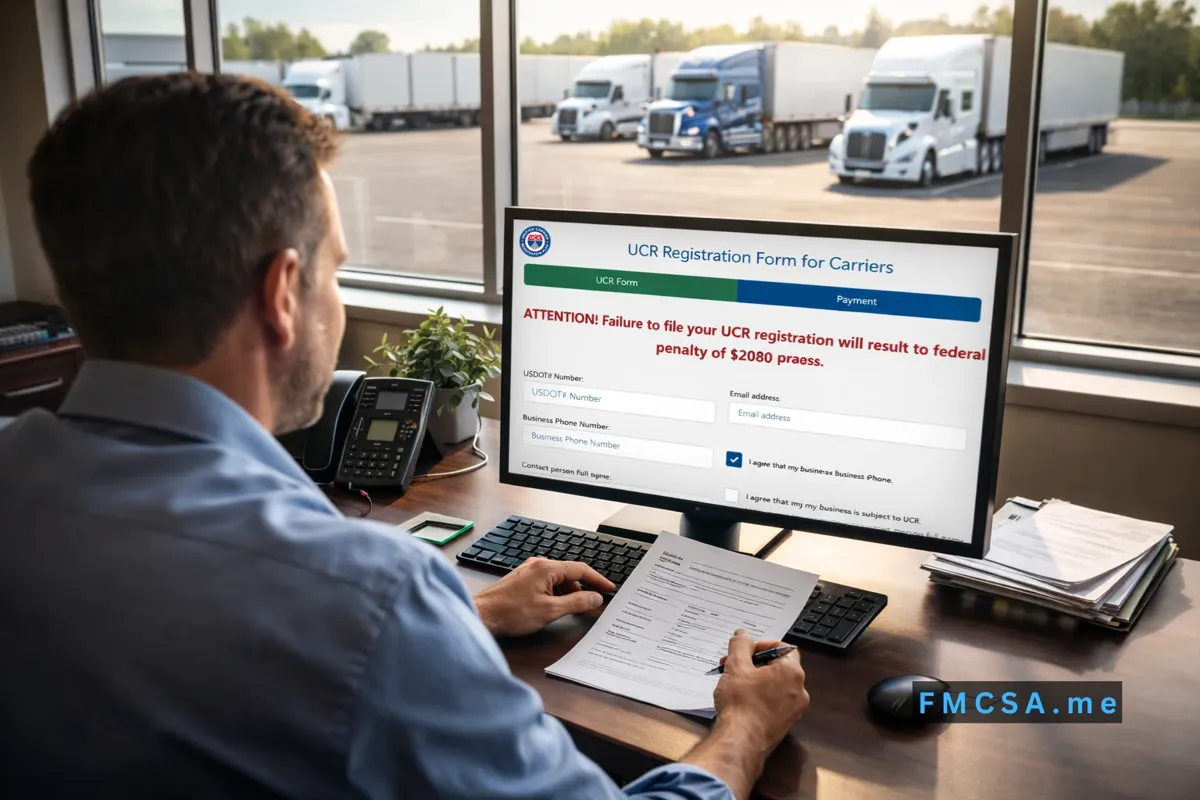
Top UCR Registration Mistakes That Trigger FMCSA Audits (And How Trucking Companies Can Avoid Them in 2026)
UCR registration is an annual requirement for trucking companies and owner-operators operating across state lines to remain compliant with federal regulations. However, many carriers unintentionally make errors during the unified carrier registration process, which can raise red flags during audits or inspections. Understanding these common errors can help carriers avoid penalties, delays, and compliance issues in 2026.
What Is UCR Registration and Why It Matters
The Unified Carrier Registration (UCR) program mandates that interstate motor carriers, freight forwarders, leasing companies, and brokers pay an annual fee based on fleet size. This program contributes to state-level enforcement of safety regulations.
Failure to complete UCR registration properly may result in enforcement actions, including fines and operational disruptions. Because enforcement agencies frequently audit carrier records, accuracy and timely filing are critical.
Common UCR Registration Mistakes
Many FMCSA compliance issues stem from minor yet critical registration errors. The following are the most common mistakes that trucking companies make.
Incorrect Fleet Size Reporting
One of the most common mistakes in unified carrier registration is reporting the incorrect number of commercial vehicles. UCR fees are based on fleet size, so underreporting or overreporting can result in compliance issues.
Carriers should ensure that their fleet count corresponds to the number of commercial vehicles listed in their USDOT records.
Outdated USDOT Information
If your USDOT registration information is outdated, it may not match your UCR registration information. Enforcement agencies frequently compare these databases, and discrepancies can result in audits. Regularly reviewing and updating company information helps to keep records accurate.
Regularly reviewing and updating company information helps maintain accurate records.
Missing the Annual Filing Deadline
The unified carrier registration must be renewed each year. Some trucking companies forget to renew on time, which can result in penalties or enforcement stops during roadside inspections.
Setting reminders and completing the filing early can prevent last-minute issues.
Registering Through Unofficial Websites
Another growing issue is carriers accidentally filing through third-party sites that charge unnecessary service fees. While these sites may offer assistance, they frequently increase costs and create confusion about filing status.
Why Many Trucking Companies Choose Professional Registration Services
While carriers can file on their own, many trucking companies prefer using a professional service to avoid errors and ensure everything is completed correctly.
Using a trusted service provider can simplify the entire UCR registration process by verifying fleet information, helping prevent common filing mistakes, and ensuring your unified carrier registration is submitted accurately and on time. For busy trucking companies and owner-operators, this support can save time, reduce compliance risks, and provide peace of mind.
How Trucking Companies Can Stay Compliant in 2026
Staying compliant with unified carrier registration requirements doesn’t have to be complicated. A few best practices can reduce risk and simplify the process.
Review Your Fleet Data Annually
Before filing your UCR registration, confirm that your fleet count and company details match your FMCSA records.
Keep compliance records organized.
Maintaining clear documentation of registration confirmations, receipts, and compliance records can help if questions arise during inspections or audits.
File Early Each Year
Submitting your unified carrier registration well before enforcement deadlines gives you time to correct any errors and avoid penalties.
Accurate and timely UCR registration is an important part of FMCSA compliance. By avoiding common mistakes in unified carrier registration and keeping company information up to date, trucking companies can reduce audit risk and stay focused on running safe, efficient operations.