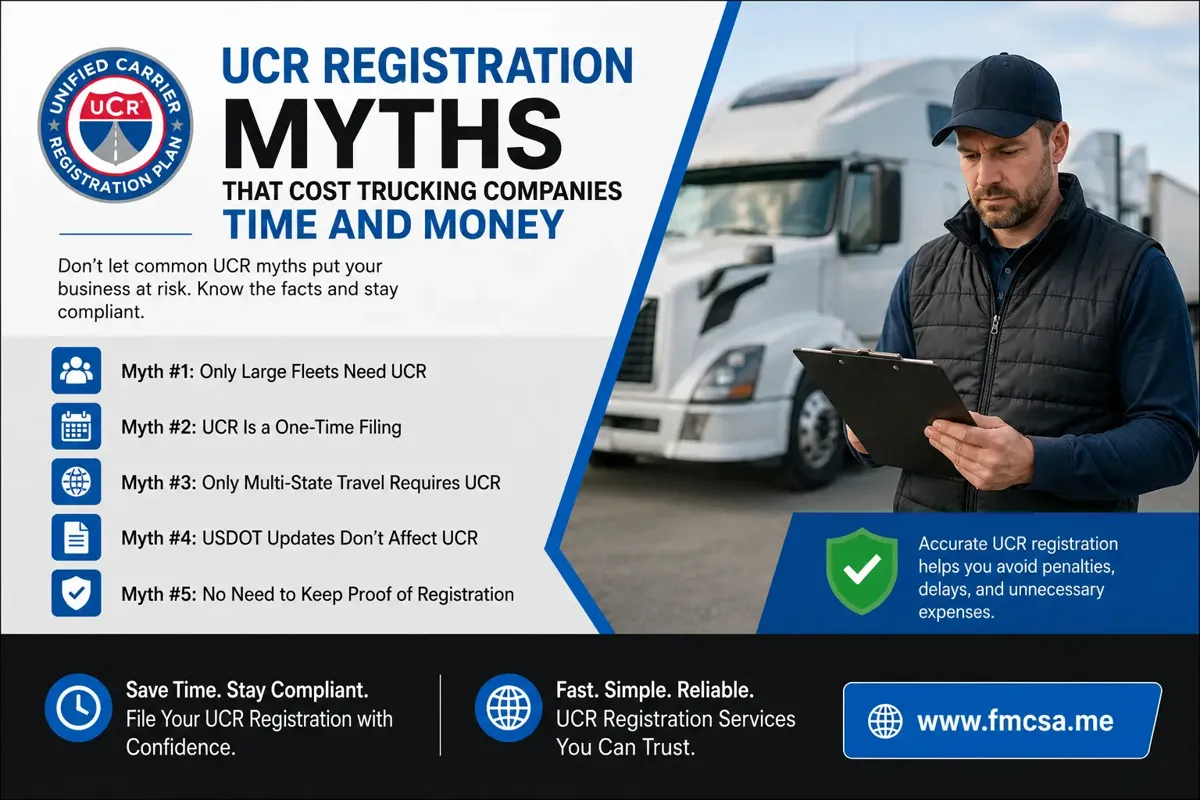
Many trucking companies focus on major compliance requirements such as DOT authority, IFTA, and IRP registration. However, Unified Carrier Registration (UCR) filing is another important requirement that often causes confusion.
Misunderstandings about UCR can lead to unnecessary delays, compliance issues, and avoidable expenses. Understanding the facts can help trucking companies stay compliant and avoid costly mistakes.
Myth #1: Only Large Trucking Companies Need UCR Registration
One of the most common misconceptions is that UCR registration only applies to large fleets. In reality, many interstate motor carriers, freight forwarders, brokers, and leasing companies are required to register regardless of fleet size. Even a small operation with a single commercial vehicle may need to complete a UCR filing if it operates in interstate commerce.
Myth #2: UCR Registration Is a One-Time Requirement
Some business owners assume that once they file for UCR, they never need to worry about it again. UCR registration must be renewed annually. Missing a renewal can result in compliance problems and enforcement actions during inspections or audits. Establishing a yearly compliance calendar can help prevent missed deadlines and reduce the risk of costly compliance issues.
Myth #3: Companies Only Need UCR If They Travel Through Multiple States
Another common misunderstanding is that carriers must physically travel through several states to require UCR registration. The requirement is generally tied to interstate operations, not simply the number of states traveled. Companies involved in transporting goods across state lines may still need UCR compliance even if their operations are limited to a specific geographic area.
Myth #4: UCR Registration and USDOT Updates Are Unrelated
Many carriers overlook the connection between their USDOT records and UCR filings. Information reported through the MCS-150 and USDOT profile can affect UCR registration requirements. Outdated or inaccurate records may create compliance issues and make future filings more complicated. Keeping business records current helps support accurate UCR registration.
Myth #5: UCR Compliance Is Easy to Verify Without Documentation
Some trucking companies assume that once payment is submitted, no further records are necessary. Maintaining proof of registration and payment confirmation is an important compliance practice. Proper recordkeeping can simplify audits, inspections, and internal compliance reviews while helping carriers quickly verify their compliance status when needed.
Why Many Trucking Companies Choose Our Service
Navigating UCR registration requirements can be confusing, especially for carriers managing multiple compliance obligations throughout the year. Many trucking companies choose FMCSA.me because the process is designed to be simple, fast, and efficient. Instead of spending valuable time researching filing requirements, carriers can complete their UCR registration through a trusted platform that helps reduce the risk of common filing errors. FMCSA.me provides a convenient online solution that allows trucking companies, brokers, and freight forwarders to handle their UCR filing quickly, helping them stay focused on running their business while maintaining compliance with registration requirements.
Understanding the Facts Can Save Time and Money
Believing common UCR myths can cost trucking companies valuable time and money. Annual registration, accurate fleet information, updated USDOT records, and proper documentation all play important roles in maintaining compliance. By understanding the facts and staying organized, trucking companies can avoid unnecessary complications, reduce compliance risks, and keep their operations moving efficiently throughout the year.