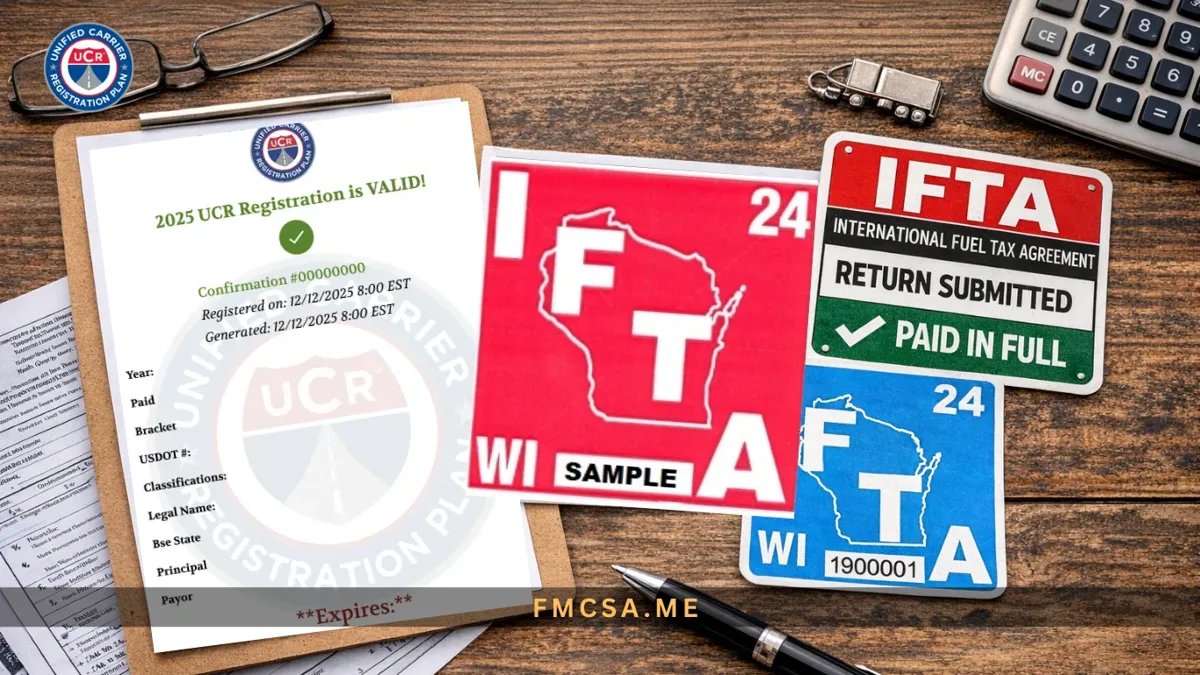
If you are a new carrier or owner-operator, the alphabet soup of trucking regulations can feel overwhelming. Between obtaining your USDOT number and getting on the road, you are hit with three major acronyms: UCR, IRP, and IFTA.
While they all relate to interstate compliance, they serve completely different purposes. Mixing them up can lead to expensive fines or even having your truck placed out of service.
Here is a simple breakdown of what each one means, who needs it, and how to handle your registration quickly.
1. UCR (Unified Carrier Registration)
Unified Carrier Registration (UCR) is a federally mandated program. It is not a fuel or plate tax, but rather an annual registration fee that funds national safety enforcement programs.
Who requires it?
If you operate a commercial vehicle in interstate commerce (crossing state lines), you likely need UCR. This applies to:
- Motor carriers (for-hire and private)
- Freight forwarders
- Brokers
- Leasing companies
Unlike other permits, which are based on mileage, UCR fees are solely determined by the size of your fleet.
The deadline: UCR must be renewed annually. Enforcement typically begins on January 1st, so any delays can result in immediate penalties during roadside inspections.
2. IRP (International Registration Plan)
The International Registration Plan (IRP) focuses on your license plates. Instead of purchasing a separate license plate for each state you travel through, IRP allows you to purchase a single "Apportioned Plate."
Who requires it?
You typically require an IRP if your vehicle:
- Travels in two or more jurisdictions (states or Canadian provinces).
- Has a gross vehicle weight over 26,000 lbs.
- Has three or more axles (regardless of weight).
The fee you pay is "apportioned" (distributed) among the states based on the percentage of miles you drive in each. You will be given a "Cab Card" listing all jurisdictions where you are legally allowed to operate.
3. IFTA (International Fuel Tax Agreement)
The IFTA simplifies the reporting of fuel use taxes. Prior to IFTA, truckers were required to purchase fuel permits for each state they entered. You will now file a single quarterly tax return with your base state.
The requirements for IFTA and IRP are nearly identical. If your truck weighs more than 26,000 pounds, has three axles, and crosses state lines, you must display an IFTA decal.
You keep track of how much fuel you buy and how far you drive in each state. If you purchased low-cost fuel in a state with high taxes, you must pay the difference at the end of each quarter. If you purchased expensive fuel in a low-tax state, you may be eligible for a credit.
Why Choose FMCSA for Compliance?
Managing these requirements takes time away from running and growing your business. Attempting to navigate government websites directly can be a major headache; they are often notorious for clunky interfaces, confusing navigation, and frequent crashes during peak renewal seasons. Plus, if you get stuck, you're often left waiting on hold for hours with no one to help.
That is where FMCSA comes in. We specialize in making compliance easier for carriers of all sizes.
- Same-Day Approval: We process UCR registrations instantly, allowing you to get legal and get moving.
- Live Support: Unlike government portals, our industry experts are available to answer your questions.
- Secure and Simple: Our user-friendly dashboard organizes your digital paperwork, ensuring you never miss a renewal deadline.
Don’t let compliance paperwork slow you down. Register your business with fmcsa.me today and drive with peace of mind.