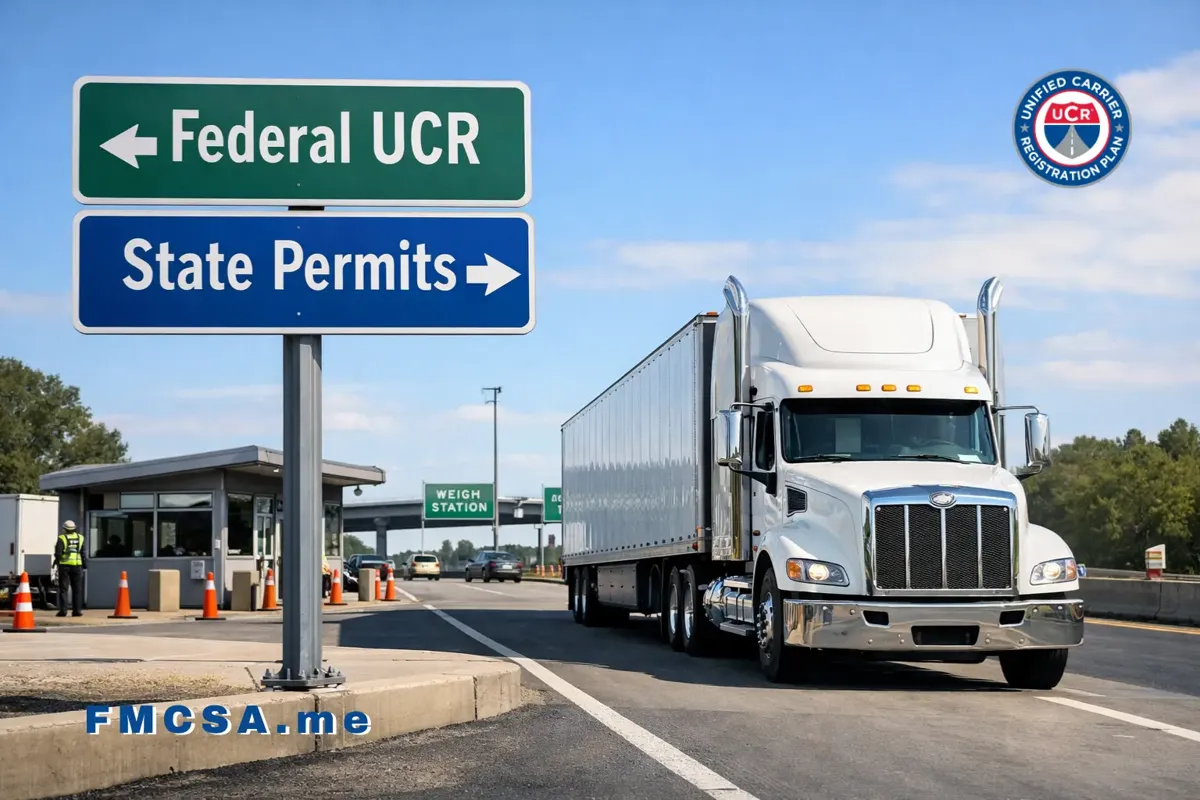
UCR vs State Permits: What’s Federal and What’s Not?
If you run a trucking business, understanding the differences between UCR (Unified Carrier Registration) and state permits is critical for compliance and to avoid costly mistakes. Many carriers confuse these requirements, risking fines or delays. Let’s break it down clearly.
What Is UCR (Federal Requirement)?
The Unified Carrier Registration (UCR) program is a federal-level requirement that applies to interstate carriers, brokers, and freight forwarders. It’s based on your fleet size and helps fund safety enforcement programs across participating states.
Even though states collect UCR fees, the program itself is federally mandated. If you operate across state lines, you must register annually.
Key Takeaways:
- Applies to interstate operations
- Based on fleet size
- Renewed every year
- Supports national safety enforcement
What Are State Permits?
State permits, on the other hand, are issued by individual states and vary widely depending on where you operate. These permits are often tied to specific activities, like the following:
- Oversized/overweight loads
- Intrastate operations
- Temporary trip or fuel permits
Each state has its own rules, fees, and enforcement systems for these permits.
Examples of State-Level Requirements:
- Trip permits for out-of-state trucks.
- Fuel permits (in non-IFTA situations)
- Oversized/overweight hauling permits
UCR vs State Permits: The Core Difference
The simplest way to understand it:
- UCR = Federal compliance for operating authority
- State permits = Local permission for specific activities
You can’t substitute one for the other. Even with paid UCR fees, you may still need multiple state permits depending on your routes and cargo.
Why This Difference Matters
Confusing UCR with state permits is common, especially for new carriers. Missing either requirement leads to penalties, delays, or increased costs.
- Roadside penalties
- Delayed shipments
- Increased operational costs
Understanding where federal responsibility ends and state authority begins helps you stay compliant and reduce risk.
Why Many Carriers Choose FMCSA.me
Instead of managing multiple systems and deciphering complex requirements, many trucking professionals use FMCSA.me because it provides step-by-step assistance for UCR registration, tracks upcoming compliance deadlines, and alerts you to missing documents all in one place.
FMCSA.me not only simplifies UCR registration but also helps carriers maintain compliance by providing easy-to-follow instructions, timely renewal reminders, and personalized support. Its specialized services help ensure you avoid overlooked fees or deadlines, saving time and reducing common errors in the registration process.
UCR and state permits have distinct roles. Knowing how they work together keeps your business compliant and avoids unnecessary interruptions.